Table of Contents
Teacher certification in India can feel overwhelming, especially when good teaching and the right paperwork do not always arrive together. A common scene in schools goes like this: a teacher is doing sincere work in the classroom, managing children, lesson plans, and parent expectations, but when appraisal season comes, the same question surfaces again: “Do you have the right certification?” In many Indian schools, especially growing private schools, this is where confusion begins. Good teaching and the right paperwork do not always arrive together.
1. Teacher Certification Starts With The Classroom
Teacher certification in India is not one single route. The right course depends first on the age group you want to teach, and then on the kind of school you want to work in.
This matters because schools hire differently. A preschool may value early childhood training and classroom warmth. A CBSE secondary school is likely to look for a B.Ed plus subject expertise. A teacher can be excellent with children and still feel stuck professionally because their certification does not match the role they are already doing.
Before choosing a course, be clear about one thing: are you preparing for preschool, primary, middle school, secondary school, or a specialist support role?
2. Early Years And Primary Pathways
For teachers planning to work in preschool or the foundational stage, ECCE-focused training and diploma programmes are often the most relevant starting point. Courses in Montessori education, nursery teacher training, and early childhood care and education help teachers understand child development, classroom routines, and play-based learning.
This is especially useful in Indian classrooms where one teacher may be expected to settle a crying child, lead a phonics activity, speak to parents, and still maintain observation records before dispersal. That work needs more than affection for children. It needs training.
For primary teaching, a D.El.Ed can be the right fit, especially for those targeting formal school systems where recognised qualifications matter. It gives a stronger base in pedagogy and child learning than many short private certificates.
3. Secondary Teaching And Formal Eligibility
For upper primary, middle, and secondary levels, the B.Ed remains the most widely accepted teacher certification route. In many schools, it is still the qualification that signals employability, especially when paired with a relevant subject degree.
There is also the reality of recruitment filters. Even when school leaders personally value demonstration classes more than certificates, HR shortlists often begin with formal eligibility. That means candidates without a B.Ed may not even reach the classroom round.
If you want to work in government schools or many recognised private institutions, exams such as CTET or state TETs can also become important. These are not replacements for teacher education, but they do strengthen eligibility.
A useful way to think about it is simple:
- ECCE or Montessori for preschool and early years
- D.El.Ed for elementary teaching pathways
- B.Ed for upper primary to secondary roles
- CTET or TET for eligibility in many school systems
4. Skills Courses That Strengthen Daily Practice
There is another side to teacher certification that schools increasingly notice: professional development that improves actual classroom practice.
Many teachers already hold a degree, but struggle with digital teaching tools, lesson adaptation, assessment design, or parent communication. This is where short, relevant courses can make a real difference. Not because they replace formal qualifications, but because they make a teacher more effective in today’s school environment.
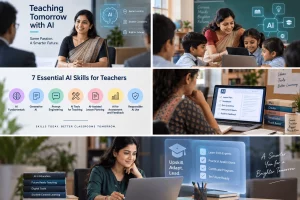
At IITED, we have seen this clearly with educators who take the AI for Educators course. It does not sit in competition with a B.Ed or D.El.Ed. Instead, it helps teachers plan faster, personalise resources, and use AI responsibly without losing human judgement. For school leaders, that matters. A teacher who can reduce prep time and improve lesson clarity is immediately more valuable.
5. Teacher Certification That Matches Your Next Step
The mistake many teachers make is choosing the most popular course, not the most suitable one. A preschool teacher does not always need to rush into a generic programme that adds little to daily practice. A secondary teacher aiming for long-term growth should not avoid a B.Ed if school eligibility depends on it.
A better decision comes from asking:
- Which age group do I actually want to teach?
- Which roles am I eligible for after this course?
- Will this certification improve hiring chances, classroom confidence, or both?
That final point matters more than people admit. Some courses look impressive on paper but change very little in the classroom. Others quietly improve confidence, structure, and professional credibility.
6. Conclusion
The best teacher certification is not the one everyone else is doing. It is the one that fits your classroom, your career stage, and the kind of school you want to grow in. Start with the role, then choose the qualification. If you already have the formal basics in place, targeted professional learning, such as IITED’s AI for Educators course, can help you stay relevant in a school system that is changing quickly.
7. Frequently Asked Questions
1. Is teacher certification mandatory for private schools in India?
Not always in the same way across all schools, but most established schools prefer recognised qualifications, especially for primary and secondary roles.
2. Which teacher certification is best for preschool teachers?
ECCE, Montessori, and nursery teacher training courses are usually the most relevant for preschool and foundational stage teaching.
3. Does a B.Ed help in private school recruitment?
Yes. In many schools, a B.Ed improves shortlist chances and is often treated as a basic requirement for formal teaching roles.
4. Is CTET the same as teacher certification?
No. CTET is an eligibility exam. It supports recruitment but does not replace a teaching qualification such as D.El.Ed or B.Ed.
5. Can short courses improve teaching careers?
Yes, if they solve real classroom problems. Courses in digital pedagogy, inclusive practice, or AI use can strengthen day-to-day teaching.
6. Where does IITED’s AI for Educators course fit in?
It works best as a professional upskilling course for teachers who want to improve lesson planning, productivity, and responsible use of AI in education.